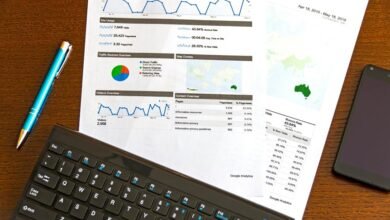
Business Analytics Overview: 4104548862, 4106770170, 4107533411, 4108472753, 4109343511, 4122611113


Business analytics serves as a critical tool for organizations seeking to harness the power of data for informed decision-making. It encompasses various methodologies and technologies that convert historical data into meaningful insights. By examining its key concepts and real-world applications across industries, one can better appreciate its role in enhancing operational effectiveness. The implications of business analytics extend beyond mere data interpretation, suggesting a deeper influence on strategic outcomes. What lies behind these analytical frameworks?
Understanding Business Analytics: Key Concepts and Definitions
Although business analytics may seem like a straightforward concept, it encompasses a range of methodologies and practices that transform data into actionable insights.
Central to this field are data-driven decisions, which leverage historical data to guide strategic choices. Predictive modeling further enhances these insights by forecasting future trends, enabling organizations to anticipate market shifts and adapt proactively, thereby fostering innovation and competitiveness.
Tools and Technologies for Effective Business Analytics
A vast array of tools and technologies exists to enhance the effectiveness of business analytics, each designed to address specific analytical needs and organizational goals.
Key components include data visualization software, which facilitates intuitive interpretation of complex data, and predictive modeling tools that leverage historical data to forecast future trends.
Together, these technologies empower organizations to make informed, strategic decisions based on robust analytical insights.
Real-World Applications of Business Analytics in Various Industries
Business analytics has found diverse applications across various industries, demonstrating its capacity to drive efficiency and innovation.
In healthcare analytics, patient outcomes improve through data-driven insights. Retail optimization enhances inventory management, while financial forecasting aids in strategic investments.
Additionally, supply chain analytics streamlines operations, and customer segmentation allows for tailored marketing strategies, ultimately fostering enhanced decision-making and competitive advantages across sectors.
Conclusion
In conclusion, business analytics emerges as the compass guiding organizations through the turbulent seas of data. By harnessing sophisticated tools and methodologies, companies can navigate complex market landscapes with precision. The transformative power of analytics not only illuminates past trends but also casts a forward-looking lens on future opportunities. As industries continue to evolve, those adept at employing these insights will undoubtedly cultivate a fertile ground for innovation and sustained competitive advantage, ensuring their place in the ever-changing business ecosystem.